Cehennemağzı Caves are located in İnönü neighborhood of Zonguldak Ereğli District. This region is known as the Acheron Valley of Antiquity.
The Cehennemağzı Caves, which is a ruin of the Ereğli Museum, consist of three caves lined side by side. The first cave was arranged in two sections. In the first section, the floor is paved with original plant and geometric motif mosaic. A small apse was opened on the eastern wall of the second section and there were stepped steps in front. This cave, which is a very old Christian church, was used as a place of secret worship in the early years of Christianity.
The second cave is located on a 10-12-meter-high slope on the side of the road and is called Koca Yusuf Cave by the local people. The cave descends through a narrow entrance on the slope with the help of a 3-step vertical staircase and continues into the 1.5 km mountain. In the 1960s, it was possible to reach a depth of 350 meters since it closed a rock road that fell from the ceiling. The cave, which is understood from the traces of the stonemason pencil, is an area of approximately 400 m2 and is supported by two elephant legs.
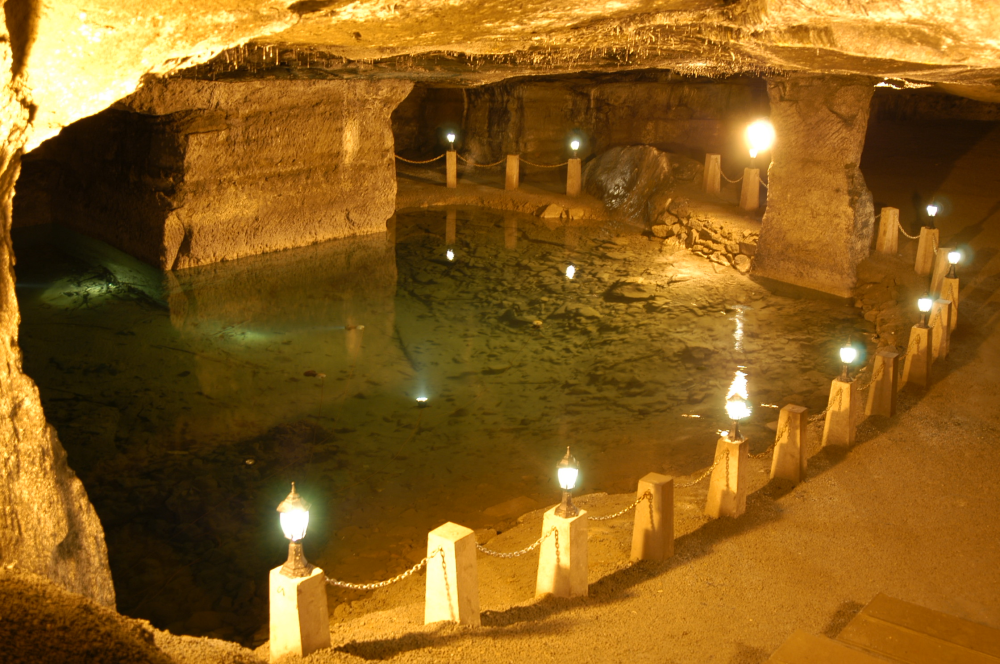
The third cave is the largest in terms of surface area. The floor is covered with floor water. The cave, built by human hand, served as a water cistern for the first and second caves.
The History of Cehennemağzı Caves
The last and most difficult of the twelve missions given by Heracles (Hercules) to King Heracles (Hercules), symbolizing human invincible endurance and attacking power, is the abduction of the Hell Dog Kerberus from the Land of the Dead (Hades), where no mortal can ever return. Heracles came to Eregli with the Argo sailors, who set out to search for the Golden Fleece, and, with the help of Hermes and Athena, brought Kerberus to earth. When Eurystheus is very scared when he sees Kerberus, Heracles returns him to the Land of the Dead. The place where Heracles descended to the Land of the Dead to abduct Kerberus is the Hellfang Caves.
Columns, column capitals, mosaic flooring and oil lamp nests in the cave, also known as the church cave, which is the first of the Cehennemağzı caves, show that the cave was used as a secret worship center by the first Christians in the period when paganism was dominant and Christianity was forbidden. The remains inside this cave are decorated with motifs bearing the traces of the Early-Christian period.